




What is the installation distance between guardrail brackets?
 Aug 20, 2025|
What is the installation distance between guardrail brackets?
As a guardrail bracket supplier, I often receive inquiries from customers regarding the installation distance between guardrail brackets. This is a crucial aspect of guardrail installation, as it directly impacts the safety and stability of the guardrail system. In this blog post, I will delve into the factors that determine the installation distance between guardrail brackets and provide some general guidelines to help you make informed decisions.
Factors Affecting the Installation Distance
1. Type of Guardrail
Different types of guardrails have different structural requirements, which in turn affect the installation distance of the brackets. For example, a simple residential guardrail made of wood or PVC may require a different bracket spacing compared to a heavy - duty industrial guardrail made of steel.
- Wooden Guardrails: Wooden guardrails are relatively lightweight. For a standard 2x4 or 4x4 wooden guardrail used in residential settings, the bracket installation distance can typically range from 3 to 4 feet. This spacing provides sufficient support to keep the wooden rails in place and withstand normal usage.
- Steel Guardrails: Steel guardrails are much stronger and more durable. In industrial or commercial applications, where there is a higher risk of impact, the bracket spacing for steel guardrails can be wider. However, it usually ranges from 4 to 6 feet, depending on the thickness and strength of the steel used.
2. Load - Bearing Requirements
The amount of weight or force that the guardrail needs to support is a significant factor in determining the bracket installation distance.
- Low - Load Applications: In areas where the guardrail is mainly for decorative purposes or to prevent accidental falls of pedestrians, such as in a garden or a balcony, the load - bearing requirements are relatively low. In such cases, a wider bracket spacing can be used. For example, a decorative metal guardrail in a garden may have brackets installed every 4 to 5 feet.
- High - Load Applications: In industrial settings, like around machinery or in areas with heavy traffic, the guardrail needs to withstand significant impact forces. In these situations, the bracket spacing should be reduced to ensure the guardrail can bear the load. For instance, in a factory where forklifts operate, the bracket installation distance for a steel guardrail may be as close as 3 feet.
3. Environmental Conditions
The environment in which the guardrail is installed also plays a role in determining the bracket spacing.
- Wind and Weather: In areas with high winds or extreme weather conditions, the guardrail needs to be more securely fastened. The brackets should be installed closer together to prevent the guardrail from being damaged or blown over. For example, on a coastal area where strong winds are common, the bracket spacing for a metal guardrail may be reduced to 3 to 4 feet.
- Corrosive Environments: If the guardrail is installed in a corrosive environment, such as near a chemical plant or a salt - water area, the materials may weaken over time. To compensate for this, the bracket spacing should be decreased to maintain the stability of the guardrail.
General Guidelines for Bracket Installation Distance
Based on industry standards and best practices, here are some general guidelines for the installation distance between guardrail brackets:
- Residential Guardrails: For most residential guardrails, whether they are made of wood, PVC, or light - gauge metal, the bracket spacing should be between 3 and 4 feet. This spacing provides a good balance between support and cost - effectiveness.
- Commercial and Industrial Guardrails: In commercial and industrial settings, the bracket spacing typically ranges from 3 to 6 feet. For high - traffic areas or areas with a high risk of impact, the spacing should be on the lower end of the range.
Importance of Correct Bracket Installation Distance
Installing guardrail brackets at the correct distance is of utmost importance for several reasons:
- Safety: A properly installed guardrail with the correct bracket spacing can prevent accidents and protect people from falls or impacts. If the brackets are too far apart, the guardrail may not be able to withstand the forces applied to it, leading to failure.
- Durability: Correct bracket spacing ensures that the guardrail is evenly supported, reducing stress on individual components. This helps to extend the lifespan of the guardrail and reduces the need for frequent repairs or replacements.
- Compliance: In many cases, building codes and safety regulations specify the maximum allowable bracket spacing for guardrails. By following these guidelines, you can ensure that your guardrail installation is compliant with the law.
Our Products and Their Suitability
As a guardrail bracket supplier, we offer a wide range of high - quality brackets to meet different installation requirements. Our Sheet Metal Bracket is made of high - grade sheet metal, which is strong and corrosion - resistant. These brackets are suitable for a variety of guardrail types and can be installed at the appropriate distances based on your specific needs.
Our Stainless Steel Supports for Air Conditioners are not only suitable for air conditioners but can also be used in guardrail installations where high strength and durability are required. They can be installed at a slightly wider spacing in some applications due to their robust construction.
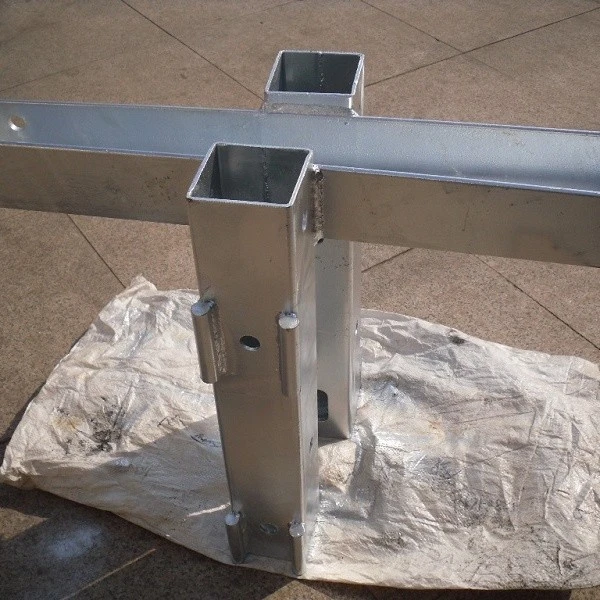
The Square Tube Bracket is another popular product in our catalog. It provides excellent support for square - tube guardrails and can be installed at the recommended distances to ensure the stability of the guardrail system.
Contact Us for Purchase and Consultation
If you are in the process of installing a guardrail or need to replace existing brackets, we are here to help. Our team of experts can provide you with detailed advice on the correct installation distance for your specific project. We can also offer customized solutions to meet your unique requirements.

Whether you are a contractor, a property owner, or an architect, we welcome you to contact us for purchase and consultation. We look forward to working with you to ensure the safety and quality of your guardrail installation.
References
- "Guardrail Installation Best Practices" - Industry Handbook on Safety Barriers
- "Structural Design of Guardrails" - Engineering Journal for Building Safety
- "Building Codes and Regulations for Guardrails" - Local and National Building Standards