




Can a metal enclosure be used in a clean room environment?
 Nov 27, 2025|
Hey there! As a metal enclosure supplier, I often get asked if metal enclosures can be used in a clean room environment. It's a valid question, especially considering the strict requirements of clean rooms. So, let's dive right in and explore this topic.
First off, what exactly is a clean room? A clean room is a controlled environment where the concentration of airborne particles is regulated. These rooms are used in industries like semiconductor manufacturing, pharmaceuticals, and biotechnology, where even the tiniest particle can cause big problems. The cleanliness of a clean room is classified according to the number of particles per cubic meter at a specific particle size. For example, a Class 1 clean room has fewer than 1 particle per cubic meter larger than 0.1 micrometers.
Now, let's talk about metal enclosures. Metal enclosures are used to house and protect various equipment. They come in different shapes and sizes, and can be made from materials like steel, aluminum, and stainless steel. Cabinet Sheet Metal is one type of metal enclosure that's commonly used in different applications. It's great for providing a sturdy and secure housing for electrical and electronic components.
So, can metal enclosures be used in a clean room? The answer is yes, but with some important considerations.
Advantages of Using Metal Enclosures in Clean Rooms
Durability
Metal enclosures are incredibly durable. They can withstand harsh conditions, including temperature variations, humidity, and mechanical stress. This is crucial in a clean room environment, where the equipment needs to be protected from any external factors that could affect its performance. For example, in a semiconductor manufacturing clean room, the equipment is often exposed to high temperatures during the manufacturing process. A metal enclosure can provide a stable and protective environment for the sensitive components.
Cleanability
Metal surfaces are relatively easy to clean. They can be wiped down with cleaning agents without getting damaged. This is important in a clean room, where maintaining a high level of cleanliness is essential. You can use specialized cleaning solutions to remove any contaminants from the metal enclosure, ensuring that it doesn't contribute to the particle count in the clean room.
Customizability
Metal enclosures can be customized to meet the specific needs of a clean room application. You can have them designed with specific dimensions, cutouts, and access points. Machine Sheet Metal is another type of metal enclosure that can be tailored to fit the requirements of different machines. This customizability allows for a better integration of the equipment into the clean room environment.
Challenges of Using Metal Enclosures in Clean Rooms
Particle Generation
One of the main challenges of using metal enclosures in clean rooms is particle generation. Metal can produce particles through processes like abrasion, corrosion, and machining. When the metal enclosure is being installed or during normal use, there's a risk of these particles being released into the clean room environment. For example, if the metal enclosure is scratched or rubbed against another surface, it can generate metal particles that could contaminate the clean room.
Static Electricity
Metal is a conductor of electricity, which means it can accumulate static charges. Static electricity can attract and hold particles, making it difficult to keep the metal enclosure clean. In a clean room, static charges can also cause problems for sensitive electronic components. For instance, a static discharge can damage the delicate circuits in a semiconductor device.
Solutions to Overcome the Challenges
Surface Treatment
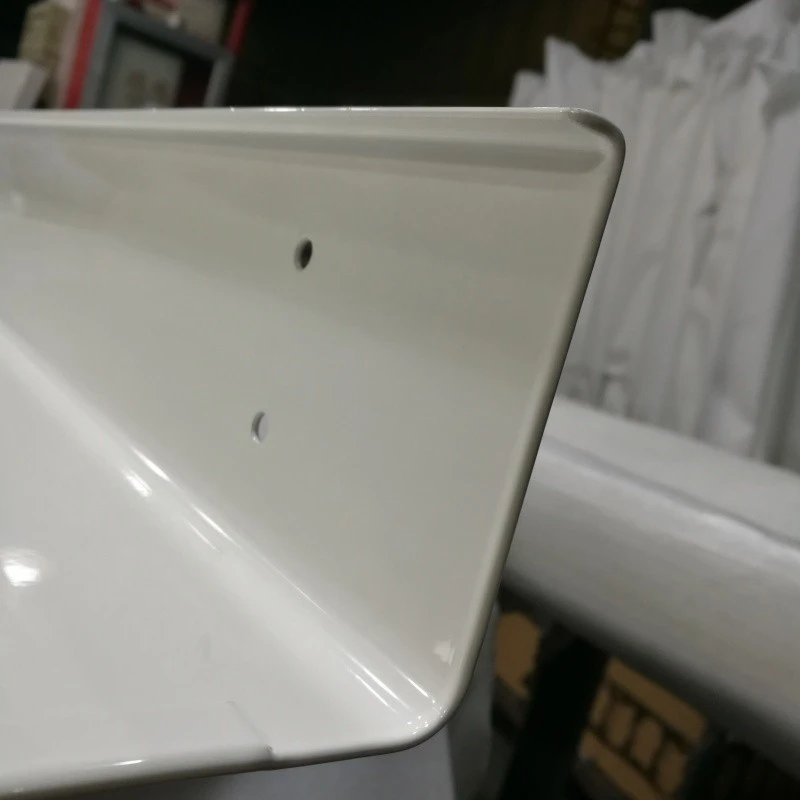
To reduce particle generation, metal enclosures can undergo surface treatment. This can include processes like passivation, which creates a protective layer on the metal surface, reducing the risk of corrosion and particle release. Another option is to apply a special coating to the metal enclosure. These coatings can be designed to be smooth and non - particle - generating, making it easier to keep the enclosure clean.
Grounding
To deal with static electricity, metal enclosures should be properly grounded. Grounding helps to dissipate the static charges, preventing them from accumulating on the metal surface. This can be achieved by connecting the metal enclosure to a grounding system in the clean room.

Regular Maintenance
Regular maintenance is essential to ensure that the metal enclosure remains clean and free of particles. This can involve routine inspections, cleaning, and any necessary repairs. By keeping the metal enclosure in good condition, you can minimize the risk of particle generation and other issues.
Another Type of Metal Enclosure: Sheet Metal Packaging Shell
Sheet Metal Packaging Shell is also a viable option for clean room applications. It's often used to package and protect smaller components. The sheet metal construction provides a lightweight yet sturdy solution for keeping the components safe during transportation and storage within the clean room.
In conclusion, metal enclosures can be a great choice for clean room environments, but you need to be aware of the challenges and take the necessary steps to address them. If you're in the market for metal enclosures for your clean room application, I'd love to have a chat with you. Whether you need Cabinet Sheet Metal, Machine Sheet Metal, or Sheet Metal Packaging Shell, we can work together to find the perfect solution for your needs. Feel free to reach out to discuss your requirements and start the procurement process.
References
- Clean Room Handbook, Second Edition by William D. Davis and William B. Golding
- Metal Finishing Guidebook by George S. Brady and Henry R. Clauser